


The future of sustainable technology is being shaped by practical innovations that reduce waste, improve efficiency, and expand access to clean energy. This article presents 24 trends that industry experts believe will transform how businesses and communities approach environmental challenges in the coming years. From energy storage breakthroughs to smarter building systems, these developments offer concrete pathways toward a more sustainable economy.
- Prefer Repairable Secure Electronics By Design
- Integrate Photovoltaics Into Roof Structure
- Empower Women To Lead Local Utilities
- Modernize Irrigation With Weather-Aware Logic
- Deploy 3D Machine Control For Earthwork
- Use Low-Flow Pumps For Groundwater
- Equip Shopfloors For Real-Time Visibility
- Adopt Adaptive Thermostats With Air Quality
- Electrify Warehouses For Profitable Efficiency
- Choose Efficient Hybrid Water Heaters
- Pair Radiant Floors With Hydronic Loops
- Turn EVs Into Home Backup Assets
- Route Compute To Cleaner Locations
- Tighten Data Context For Leaner Models
- Shift AI Inference To The Edge
- Fortify Grids With Sodium-Ion Storage
- Dematerialize Front Desks With Voice Agents
- Protect Wildlife With Smart Field Sensors
- Orchestrate Channels To Cut Message Waste
- Elevate Unbox Experience With Greener Materials
- Harvest Ambient Power For Batteryless Devices
- Optimize Buildings With Intelligent Controls
- Automate Small Firms For Real Savings
- Expand Capital Access With Inclusive Fintech
Prefer Repairable Secure Electronics By Design
I’m most excited about the shift toward built-in circular design for electronics — devices being made easier to repair, upgrade, and recover at end of life. I run ITECH Recycling in the Chicago area, so I see how much waste and risk comes from hardware being treated as disposable.
The promise is huge because it solves two problems at once: less material going to landfill, and more valuable components staying in circulation. When we process retired laptops, desktops, and servers, the best outcomes happen when equipment was designed to be disassembled cleanly and materials can actually be recovered instead of trashed.
I also think this trend matters because sustainability in tech has to include data security, not just recycling bins. A lot of businesses learn too late that an old device still holds sensitive data, which is why in projects like computer disposal and hard drive destruction around Chicagoland, secure retirement has to be part of the sustainability conversation.
Practical takeaway: buy tech based on its full lifecycle, not just purchase price. If a device can be repaired, securely wiped, reused, or responsibly broken down, it creates a much better environmental result than something glued shut and discarded the minute it ages out.

Integrate Photovoltaics Into Roof Structure
Integrated solar roofing — not panels bolted on top, but solar built directly into the roof itself. I’ve been hands-on with Tesla Solar Roof installations since Kelly Roofing became one of the first four certified installers in Florida, and we even installed the first international Tesla Solar Roof. That kind of ground-floor experience gives me a clear view of where this is headed.
What makes it genuinely exciting isn’t just the energy generation — it’s that the roof and the power system become one. Pair it with a Powerwall and your home keeps running through a Florida hurricane outage, almost instantly, no generator needed.
The promise is in the integration. Homeowners used to have to choose between a roof that protects and a solar system that produces. That tradeoff is gone. One investment covers both, and in a state like Florida where the sun is relentless and storm season is real, that’s not a luxury — it’s practical.
What I tell people is: if your roof is aging anyway, the math shifts dramatically in favor of doing both at once. Removing and reinstalling solar panels for a roof replacement later adds real cost and time. Getting ahead of it is the smarter move — and that’s exactly the kind of decision I’d make for my own home, which, for the record, already has a Kelly Roof on it.

Empower Women To Lead Local Utilities
I’m most excited about distributed clean energy systems that women can own, operate, and build into local economies—not just consume. After 20+ years working across Africa, Asia, and North America, I’ve learned the real breakthrough isn’t a gadget; it’s when energy becomes community infrastructure instead of a donor project.
Why it holds so much promise: energy poverty is rarely an isolated problem. It affects water access, food production, health, income, and safety—especially for women. Traditional aid loves single-issue fixes, but communities don’t live in silos; when women lead integrated systems, you get resilience instead of dependency.
I’ve seen this in the women we train at She Builds Power. Isabella started by learning to build rainwater tanks, toilets, and handwashing stations, then grew into a contractor and now works with MKOPA Solar while mentoring others. That’s the future I believe in: women not as “beneficiaries,” but as technical leaders shaping the energy-water-economy stack.
The contrarian view is this: the most important sustainable technology trend isn’t smarter hardware, it’s smarter ownership. If women are treated as economic infrastructure and given the tools to design and sustain these systems, clean technology stops being an intervention and starts becoming generational wealth.

Modernize Irrigation With Weather-Aware Logic
I’ve spent over thirty years as a Certified Landscape Water Manager and Chairman of the New Jersey Board of Landscape Irrigation Contractors focused on the precision of water delivery. My experience designing and auditing systems across the tri-state area has shown me that the future of sustainability lies in data-driven automation.
The trend I’m most excited about is the integration of SMART irrigation controllers, specifically the RainBird IQ platform, which utilizes real-time weather information and two-way communication. These systems move beyond simple timers by analyzing evaporation rates and soil conditions to adjust watering schedules automatically.
We are seeing significant results revamping antiquated systems by pairing these controllers with subsurface drip irrigation emitters that deliver water directly to the roots. This technology allows us to use flow sensors to detect leaks or system breaks instantly, preventing the massive water waste often hidden in traditional commercial or residential setups.

Deploy 3D Machine Control For Earthwork
As the CEO of a national infrastructure platform, I specialize in bringing advanced operational systems to regional civil construction firms. My background in scaling execution-driven businesses gives me a front-row seat to how field technology impacts the longevity and efficiency of the communities we build.
The trend I’m most excited about is the implementation of 3D Machine Control Systems for precision site grading and earthwork. This technology allows firms like Carolina Precision Grading to execute mass site preparation with extreme accuracy, significantly reducing fuel consumption and material waste on large-scale developments.
This holds promise because it optimizes complex horizontal projects, such as the utility and road work we managed for the Hills of Minneola development. By integrating these systems into regional companies like RBC Utilities, we provide the technical strength needed to build resilient infrastructure that lasts for generations.

Use Low-Flow Pumps For Groundwater
As the owner of a WBENC-certified company serving over 500 clients annually, I oversee the deployment of specialized instrumentation for organizations like federal and municipal agencies. This experience gives me a front-row seat to the hardware shifts that define sustainable field practices.
I am most excited about the advancement of low-flow groundwater sampling, specifically utilizing 12VDC stainless steel pumps from Proactive Environmental Products. These systems allow for high-precision fluid handling and low-turbidity sampling that meets strict regulatory standards.
This technology is promising because it drastically reduces the volume of “purge water” that must be extracted and treated as waste during testing. It enables professionals to collect accurate data while significantly lowering the energy and waste footprint of their field operations.

Equip Shopfloors For Real-Time Visibility
I’m most excited about real-time, mobile-friendly shop floor systems that help manufacturers stop waste before it happens. I’ve spent 20+ years in operations roles and now work with plants using Thrive, so I’ve seen how much energy, scrap, downtime, and rework get baked in when teams are stuck reacting late.
The promise is simple: you can’t improve what you can’t see in time. When operators and leaders can see downtime, nonconformances, audits, and action items in one place on the floor, they move from firefighting to fixing root causes faster.
A practical example is digital quality and safety workflows replacing scattered spreadsheets, paper, and disconnected apps. When a plant can track defects, nonconformances, accident investigations, SOPs, and follow-up actions in one connected system, problems are more visible, ownership goes up, and waste doesn’t keep repeating.
I’m also bullish on tech that complements ERP instead of trying to be everything. In manufacturing, the sustainable win usually isn’t a flashy gadget—it’s giving frontline teams real-time information and clear accountability so improvements actually stick.

Adopt Adaptive Thermostats With Air Quality
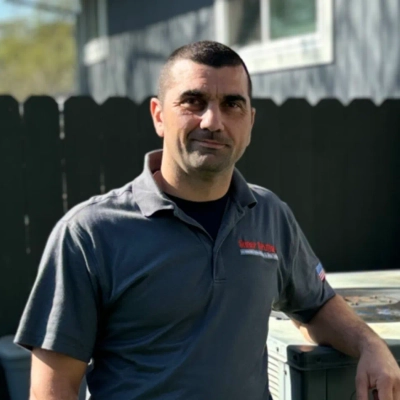
I’m most excited about smart thermostats tied to better indoor air quality controls. I run an HVAC company in Central Florida and work as a dietitian, so I think a lot about sustainability in terms of both energy use and how people actually feel in their homes.
What makes this promising is that it helps people reduce unnecessary runtime instead of just buying bigger equipment. A smart thermostat that learns routines, allows remote adjustments, and shows usage patterns can cut waste in a very practical way, especially in Florida where systems run hard for long stretches.
The bigger win is when it works with indoor air quality upgrades like air purifiers, UV lights, or oxidation systems. I’ve seen that people don’t just want lower energy use–they want cleaner air, less humidity trouble, and fewer comfort issues, and smarter controls make the whole system more responsive.
My practical advice: if you want sustainable tech that pays off in real life, start with controls and airflow before chasing flashy upgrades. Homeowners usually get more value from a well-installed smart thermostat and targeted IAQ improvements than from tech they’ll never actually use properly.

Electrify Warehouses For Profitable Efficiency
Last year at Fulfill.com, we analyzed data from 800 warehouses and found something surprising: the facilities using electric forklifts and solar panels weren’t doing it to save the planet. They were doing it because their energy costs dropped 40% and their worker retention jumped 28%. That’s when I realized sustainable warehouse technology isn’t some future trend, it’s already the smartest business decision you can make right now.
I’m most excited about warehouse electrification paired with smart energy management systems. When I built my 140,000 square foot facility, diesel forklifts were standard. The noise alone was brutal. Today’s lithium-ion equipment charges in 90 minutes, runs quieter, requires less maintenance, and the total cost of ownership beats diesel by 30% over five years. But here’s where it gets interesting.
The 3PLs winning right now are combining electric fleets with AI-powered energy systems that charge equipment during off-peak hours and sell excess solar back to the grid. One fulfillment center in Nevada we work with cut their annual energy bill from $380,000 to $140,000 while actually improving throughput because electric equipment accelerates faster and handles better in tight warehouse configurations.
The promise isn’t environmental virtue signaling. It’s that sustainability and profitability finally aligned. Brands are choosing 3PLs with renewable energy because their customers demand it, but they’re staying because the operational efficiency translates to faster shipping and lower costs. I’ve seen warehouses reduce their carbon footprint by 60% while simultaneously increasing orders per labor hour by 25%.
The real breakthrough happens when you stop thinking about sustainability as a cost center and start seeing it as a competitive advantage. In three years, electric warehouses won’t be progressive, they’ll just be standard because every other option will be too expensive and too slow.

Choose Efficient Hybrid Water Heaters
Right now, the biggest shift we see is toward heat pump water heaters. A year ago, most homeowners weren’t even asking about them. Today, it’s one of the first questions we get. They use electricity much more efficiently than traditional systems, and with current rebates, the upfront cost gap has narrowed a lot. We’ve personally seen our installations of heat pump water heaters roughly double over the past year. What makes this trend real — not just hype — is that it’s finally becoming practical. More technicians know how to install them correctly, and manufacturers are improving reliability and controls. For homeowners, it’s not just about being “green” — it’s about long-term operating cost and future-proofing the home. That’s why adoption is accelerating.
Pair Radiant Floors With Hydronic Loops
Hydronic heat pumps integrated with radiant floor systems. After 25+ years working with hydronic heating across Northern Utah, this is the combination I think is going to reshape how we heat homes sustainably.
Traditional heat pumps get most of the press, but pairing them with a radiant floor system is where the real magic happens. Radiant systems operate efficiently at lower water temperatures, which is exactly where modern heat pumps perform best—so the two technologies genuinely amplify each other rather than just coexisting.
I’ve seen this play out in Park City homes where clients wanted to reduce their gas dependency without sacrificing that deep, even warmth radiant systems deliver. The result is a setup that runs quietly, keeps floors warm, and doesn’t hammer the utility bill the way conventional electric resistance heating does.
The promise here is that it bridges the gap between old-school hydronic comfort and modern electrification goals—without forcing homeowners to choose one or the other.

Turn EVs Into Home Backup Assets
One sustainable technology trend I am most excited about is bidirectional EV charging, where the car stops being just transport and starts acting like part of the home energy system. That has real promise because the same EV can help with backup power, smarter solar use, and more flexible energy timing, which makes electrification feel more practical to normal households, not just more virtuous. The part I like most is that it pulls a few big shifts together at once: EVs, home batteries, solar, and resilience. When one piece of hardware can do more than one job well, adoption usually gets a lot easier.

Route Compute To Cleaner Locations
The sustainable technology trend I am most excited about is the push toward low-carbon electricity for data center operations, and specifically the move toward siting compute next to where clean power is already abundant rather than trucking it to legacy locations.
At GpuPerHour we run GPU rental infrastructure, and the honest truth about the AI boom is that training and inference workloads are extraordinarily power-hungry. A single training run on a large model can pull more electricity in a month than a small town uses in a year. The conventional industry answer has been to build bigger data centers near existing grid capacity and hope the grid catches up. That path is slow, politically fraught, and in many regions physically impossible within the timelines that AI is demanding.
The promising alternative is geographic compute routing. Build smaller, modular data centers in places where clean power is already curtailed or underused, like hydroelectric regions in the Pacific Northwest, geothermal in Iceland, solar surplus in parts of the Southwest. Then route non-latency-sensitive training jobs to those sites dynamically. Most large training runs do not care whether they finish in region A or region B. They care about total cost and total wall-clock time.
The reason I think this holds so much promise is that it solves two problems at once. It absorbs clean power that would otherwise be curtailed and wasted, and it reduces the pressure on already-strained grids in dense urban markets. Both sides of that equation save carbon. Neither requires any new invention, just better routing software and better relationships with power operators.
What will decide whether this actually takes off is whether the ML community gets comfortable with the idea that their jobs can be scheduled geographically, the same way cloud users already accept regional pricing differences. We think they will. The economics are too obvious to ignore.

Tighten Data Context For Leaner Models
I could point to something more obvious, like greener infrastructure or lower-power hardware, and those trends clearly matter. But from where I sit, working with enterprise companies, what feels especially important is making AI more data-efficient and context-aware before companies scale it further.
A surprising amount of waste in AI comes from poor data readiness, weak context, and workflows where the model is left to fill in too many gaps on its own. When the data reaching AI is cleaner, better structured, and closer to the business context, the output tends to improve, the process becomes more reliable, and companies spend less effort correcting, retrying, or working around low-quality results.
That is why this matters to me. I see it as a more responsible way to move forward with AI: fewer unnecessary cycles, less operational noise, and a better chance of getting useful results from the systems companies already have.

Shift AI Inference To The Edge
Edge inference replacing round-trip AI calls to centralized data centers. Every LLM query currently routes to a massive GPU cluster, consumes meaningful electricity per call, and scales linearly with usage — an unsustainable trajectory as AI gets embedded in every application. The trend I’m watching: small, quantized models running locally on-device for the 80% of tasks that don’t require frontier capabilities. This collapses energy per inference by orders of magnitude and removes the network hop entirely. The promise isn’t just environmental — it’s economic. Businesses building on AI today are paying per-token costs that edge inference could eliminate for routine workloads. Sustainability and unit economics aligning is the strongest possible signal that a trend will actually stick.

Fortify Grids With Sodium-Ion Storage
One of the most exciting sustainable technology trends right now is the evolution of energy storage and grid resilience, particularly with emerging technologies like sodium-ion batteries.
As demand for compute continues to rise, driven by AI, high-performance workloads, and always-on digital services, the pressure on power infrastructure is becoming a real constraint. What is often overlooked is that data growth and energy availability are now directly connected. You cannot scale modern IT environments without rethinking how you generate, store, and distribute power.
Sodium-ion battery technology is especially promising because it offers a more abundant and potentially more cost-effective alternative to lithium-ion. That has significant implications for grid-scale storage, where cost, supply chain stability, and safety all matter. It creates an opportunity to build more resilient energy systems that can support everything from data centers to critical infrastructure without the same resource constraints.
What makes this trend so compelling is its role in stabilizing and decentralizing power. As we see more investment in grid-independent and distributed energy models, these storage innovations can help ensure consistent, reliable power even in environments where traditional infrastructure is strained or vulnerable.
From a business perspective, this directly impacts how organizations think about risk and continuity. Energy resilience is becoming part of the broader conversation around operational resilience, right alongside cybersecurity and data protection.
The organizations that recognize that connection early, and invest in technologies that strengthen both their data and power infrastructure, will be in a much stronger position to scale, innovate, and manage risk in the years ahead.

Dematerialize Front Desks With Voice Agents
The sustainable technology trend I’m most excited about is AI-driven dematerialization — the idea that intelligent software can eliminate the need for physical infrastructure, reducing resource consumption while improving service quality.
At Dynaris, we’ve built AI voice agents that replace the need for physical receptionist setups, additional office space, and the energy footprint of traditional call center operations for small service businesses. One AI agent can handle hundreds of concurrent conversations with a fraction of the compute cost of what legacy systems required just five years ago.
What makes this so promising is the multiplier effect. When a small HVAC company or dental office deploys an AI agent to handle scheduling and customer support, they’re not just cutting costs — they’re reducing the transportation footprint of customers who might have driven in unnecessarily, eliminating paper-based intake forms, and reducing the energy overhead of maintaining physical front-desk operations.
Beyond our specific use case, I’m watching the broader convergence of edge AI (models running locally on low-power devices) with renewable energy grids. As inference gets cheaper and greener, AI will increasingly become a net positive for sustainability rather than a liability. The narrative that AI is energy-intensive is true for today’s large frontier model training — but the future of AI is in small, specialized models that run efficiently at the edge. That’s where the real environmental leverage is, and it’s happening faster than most people realize.

Protect Wildlife With Smart Field Sensors
One trend I’m really excited about is the use of smart monitoring technology in conservation, especially tools like AI-powered camera traps and sensors in forests.
At Jungle Revives, we see how difficult it is to protect wildlife across large and remote areas. Traditional methods rely heavily on manual tracking, which takes time and effort. But with smart cameras and sensors, it becomes much easier to monitor animal movement, detect threats, and understand changes in the ecosystem in real time.
What makes this technology so promising is its ability to give early warnings. For example, if a sensor detects unusual movement in a protected area at night, it can alert forest teams immediately. This helps prevent poaching or human-wildlife conflict before it escalates.
A simple real-life example: in some forest zones, camera traps have helped identify patterns in animal movement. This information is then used to guide tourists through safer routes and reduce disturbance to wildlife. It improves both conservation and visitor experience at the same time.
Another reason this trend stands out is that it balances technology with nature, rather than replacing it. It supports conservation teams on the ground without interfering with the natural behavior of animals.
In simple terms, this kind of technology turns data into action. It helps us respond faster, plan better, and protect wildlife more effectively. That’s why it holds so much promise for the future, especially for organizations like Jungle Revives that work closely with nature.

Orchestrate Channels To Cut Message Waste
The trend I’m most excited about is conversational marketing built on intelligent channel orchestration – AI deciding in real time whether to reach a customer via RCS, WhatsApp, Viber, push, email, or SMS, instead of blasting every channel at once. It’s sustainable in a way marketers rarely talk about: smarter orchestration means fewer irrelevant messages, lower server and network load, and a meaningfully smaller digital carbon footprint per conversion – while also protecting deliverability and consumer trust, which the “spray-and-pray” model is actively destroying. At MessageFlow we’re already seeing brands cut total send volumes while increasing engagement and revenue, which is exactly the definition of doing more with less. That’s why I believe this shift will define the next decade of customer communication – it’s one of the few trends where the greener choice, the better-UX choice, and the more profitable choice are the same choice.

Elevate Unbox Experience With Greener Materials
I am most excited about sustainable packaging technologies that let brands preserve a memorable, tactile unboxing while reducing waste. At Willow & Thread we learned that how an order arrives matters more to customers than an email campaign, so keeping that physical connection is essential. Compostable and recyclable packaging solutions make it possible to include handwritten notes and printed cards without adding long-term environmental cost. They hold promise because they allow brands to keep the small, personal touches that drive word of mouth while responding to customer demand for lower-impact choices. As the owner, aligning our presentation and materials with sustainability is both a customer priority and a brand value.

Harvest Ambient Power For Batteryless Devices
Ambient energy harvesting is the new sustainable technology trend. I am very excited about it these days. I am mainly looking forward to high-efficiency micro solar integration for daily use in consumer electronics.
Broken hardware is not the largest source of e-waste in the smart home and surveillance industry. Battery degradation matters most. People throw away millions of security cameras, smart doorbells, and sensors. They do it just because the internal lithium-ion battery no longer holds a charge.
The use of ambient energy harvesting and its tools is the future. They can take away disposable batteries from our industry. Using low-power smart cameras that can charge themselves from small lights is very promising. They can use indoor lights as well and thermal energy to charge themselves. In this way, their life can be increased to 10 years from 2 or 3. I really like this trend. It proves that sustainable solutions work better when they also solve customer issues. In this way, we can keep millions of toxic lead batteries out of landfills, and a user will never have to use a ladder to change their security camera.

Optimize Buildings With Intelligent Controls
The sustainable technology trend I’m most excited about is the rapid improvement in AI-powered energy optimization for commercial buildings and data centers. This might not sound as exciting as solar breakthroughs or electric vehicles, but commercial buildings account for roughly forty percent of energy consumption in the United States, and most of them are dramatically inefficient because their HVAC, lighting, and operational systems run on static schedules rather than responding to actual conditions.
AI-driven building management systems are changing this by continuously analyzing occupancy patterns, weather forecasts, energy pricing, and equipment performance to optimize energy usage in real time. Google’s DeepMind famously reduced cooling energy in their data centers by forty percent using AI optimization, and that same technology is becoming accessible to regular commercial buildings through companies building more affordable solutions.
At Scale By SEO, sustainability in technology is something we think about because our operations rely on cloud computing infrastructure, and the energy footprint of data centers is substantial. Seeing AI used to reduce the energy consumption of the very infrastructure that powers AI feels like the technology beginning to pay its own environmental cost, which is important given the growing scrutiny of AI’s energy demands.
What excites me about this particular trend is the scalability and immediacy. Solar and wind energy are critical long-term solutions, but they require massive infrastructure buildouts. AI energy optimization can be deployed in existing buildings with existing systems and start delivering measurable energy reductions within weeks.
Automate Small Firms For Real Savings
The one trend I keep coming back to is AI-powered automation for small businesses. Not the flashy stuff. The boring, practical applications that actually save time.
I run a small insurance agency. A few years ago, everything was manual. Follow-up emails, document sorting, lead tracking. Now a handful of tools handle most of that while my team focuses on actual client conversations.
What makes this sustainable is that it’s not dependent on hype. It just works. Small business owners are notoriously slow to adopt new tech, but once something saves them three hours a week, they’re not going back.
Now? We just built a custom CRM that has far more features than anything we could purchase. We built it in house using Claude Code.
AI is bringing commercial grade tools to small businesses for pennies on the dollar.

Expand Capital Access With Inclusive Fintech
One sustainable technology trend I am most excited about is the rise of financial technology platforms that expand access to funding for underserved communities. This includes digital crowdfunding, embedded finance, and alternative lending models that allow individuals and small businesses to raise capital outside traditional systems. Too many capable people are limited not by potential, but by access. Technology is starting to close that gap in a practical and scalable way.
I see strong promise in this because it brings both efficiency and inclusion into the same space. Capital can move faster, decisions can be more data-informed, and opportunities are no longer limited to a small group of gatekeepers. At Initiate PH, this is exactly what we are working to build. A system where funding is more transparent, more accessible, and more aligned with real human needs. When technology helps more people participate in the economy, the impact becomes long term and far reaching.