

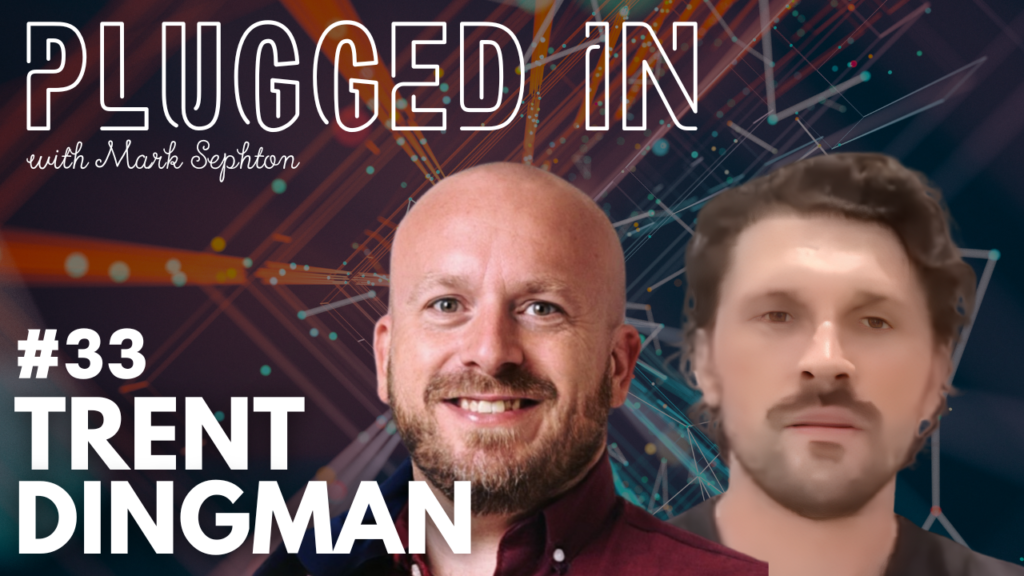
When Trent Dingman and Michael Feng worked together as mechanical engineers, their differences were as important as what they had in common. They approached design differently and thought about problems differently, but they shared an interest in science fiction and the machines imagined within it. Their conversations gradually pushed beyond improving the equipment in front of them.
That tension became part of the foundation for Real Motors, which the pair founded in 2022. Rather than starting with the conventional question of how to improve an existing vehicle, they wanted to imagine what a machine could become if engineers were given room to reconsider it.
They call the resulting philosophy Future Machines. Project Ares, Real Motors’ electric neo-cafe racer, is its first physical expression.
Technology Should Change the Experience
For Dingman, a Future Machine does not mean covering a familiar product with screens, connectivity, or futuristic styling. He is skeptical of features that add technological novelty without improving the relationship someone has with the machine itself.
Real Motors instead developed what it calls an “Electric Analogue” philosophy. Project Ares uses an electric drivetrain while retaining physical elements such as a mechanical chain drive. The intent is to use newer technology without stripping away the mechanical qualities that make riding engaging.
That thinking extends into the motorcycle’s appearance. Dingman describes seemingly ordinary experiences, such as parking at a coffee shop and looking back at the motorcycle, as legitimate design considerations. Riding through Manhattan and having strangers stop to ask about the machine matters too. These interactions are part of what the product is supposed to create.
The response to Project Ares has given the company an early indication that this approach can reach beyond conventional motorcycle categories. Dingman says deposits for the sold-out Founders Edition came from experienced riders and people who had never ridden before. Real Motors deliberately emphasized design and brand before specifications, which meant early customers were responding primarily to what the motorcycle represented and how it made them feel.
Even riders Dingman expected might resist an electric motorcycle have surprised him. At events, traditional motorcycle enthusiasts have responded positively because Real Motors is not asking them to choose between conventional motorcycles and electric ones. It is presenting Ares as something different.
An Outsider Team Can Ask Different Questions
That departure from convention was easier because most of the original Project Ares team did not come from motorcycles. Dingman himself had never ridden one before the project.
He considers that lack of experience useful when paired with engineering discipline. A team without decades of inherited assumptions can ask why something looks, operates, or is manufactured a certain way before accepting that it has to remain that way.
Real Motors applies the same principle to hiring. Dingman is less interested in assembling people who resemble one another than in finding people with complementary abilities who can challenge each other’s thinking. His own partnership with Feng established that pattern. Their differences create friction, but that friction also forces ideas to survive competing perspectives.
Dingman describes his role in similar terms. Rather than trying to be the most capable person in every discipline, he wants to find people who are better than he is at the work they are being asked to do. The objective is a small group of what he calls “rogue engineers” who can move from imagining a machine to physically building it.
Future Machines Go Beyond Project Ares
That distinction is important because Real Motors does not see itself simply as an electric motorcycle company. Project Ares is the first example of a broader Future Machines strategy, and Dingman says subsequent projects will extend into other mobility platforms.
The company is also exploring how those machines can be produced differently. Instead of assuming that a new vehicle requires a huge organization and conventional high-volume manufacturing infrastructure, Real Motors is experimenting with approaches that bring engineering closer to production and reduce repetitive labor. Dingman sees technologies such as AI as especially valuable behind the scenes, where they can help small creative teams operate with capabilities that once required much larger organizations.
The result is a different definition of futuristic design. For Real Motors, the future is not valuable because a machine looks unfamiliar or contains more technology. A Future Machine still has to make intuitive sense to the person using it.
Project Ares gives Real Motors a way to test that philosophy in public. The larger ambition is to keep asking what other machines might become when engineers stop treating the existing version as the starting boundary.
Want more Plugged In? Read more or listen on Apple Podcasts.