


Achieving personal goals requires more than willpower—it demands the right systems and timely feedback. This article explores eleven practical strategies that use IoT devices to strengthen accountability, automate helpful cues, and maintain momentum toward meaningful objectives. Industry experts share proven approaches to transform connected technology into a reliable partner for building better habits and sustaining motivation.
- Use Camera Input to Preempt Poor Choices
- Simplify Metrics to Drive Consistency
- Automate Environment to Trigger Productive Transitions
- Integrate Wearables to Guide Workouts
- Adopt Simple Prompts to Shape Habits
- Centralize Data and Adjust Daily
- Optimize Sleep Conditions to Sharpen Decisions
- Set Thresholds that Prompt Fast Course Corrections
- Escalate Tasks to Compel Follow-Through
- Leverage Voice Reminders to Protect Priorities
- Build Systems that Enforce Accountability
Use Camera Input to Preempt Poor Choices
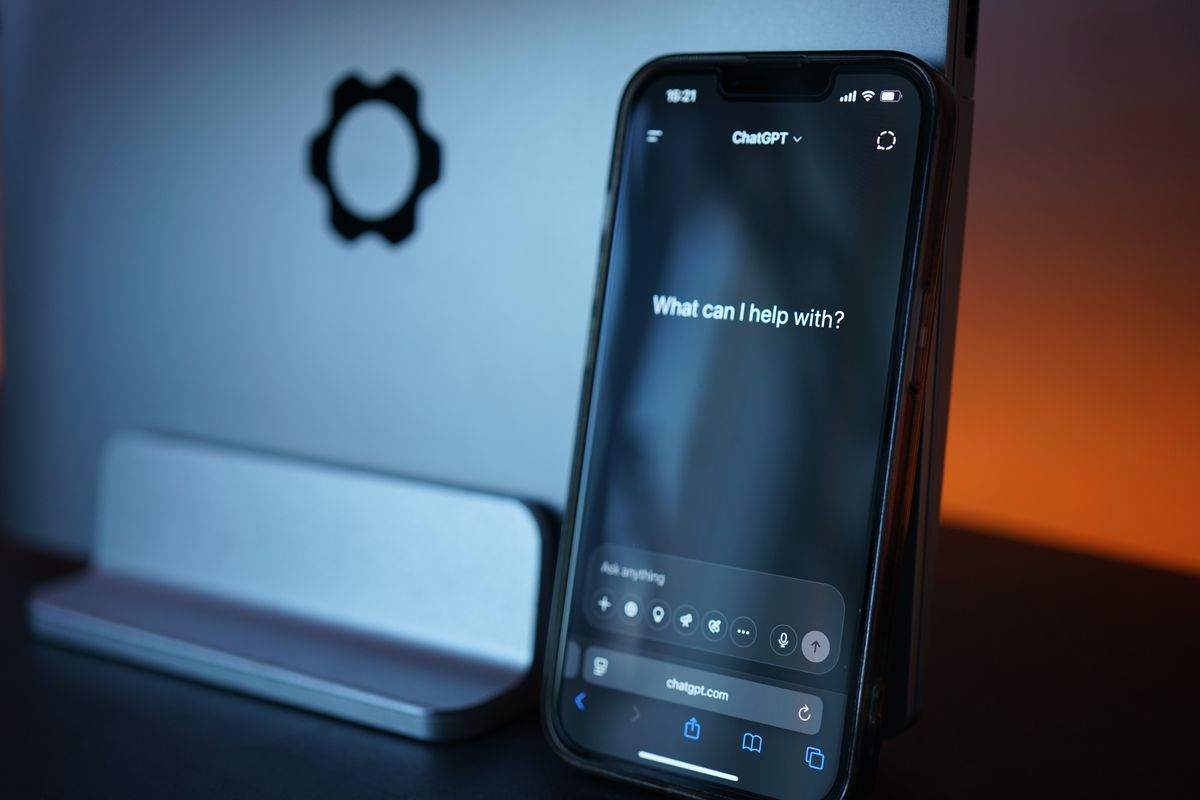
My phone is the only IoT device I need for this. I point the camera at a plate and it logs calories and macros in seconds, no manual entry, no guessing. That instant feedback loop is what keeps me consistent, not willpower. Motivation fades, but a system that removes friction does not.
I built the AI behind this, and the hardest part was not naming food, it was estimating portion size from a photo. Right now item identification lands around 93 percent, portion estimation is the piece I am still tightening. I care more about that number than any streak count or badge, because a tracker that gets the read wrong teaches you the wrong habit.
Wearables tell you what your body did. A camera tells you what you are about to put into it, before it happens. That timing matters more for behavior change than any dashboard.
I also lean on Apple Health sync so the food data sits next to sleep and activity instead of living in its own silo. Most people quit tracking because logging feels like homework. The fix was never more willpower, it was making the device do the tedious part in seconds. Build the tool around the moment of temptation, not around a weekly report nobody reads.
Simplify Metrics to Drive Consistency
I’ve had a Garmin watch for about three years now, and the relationship with it has changed considerably from how I expected it to work when I bought it.
The initial assumption was that more data would lead to greater motivation. What actually happened was that too many metrics created a kind of analysis paralysis — body battery score low, HRV down, sleep score mediocre, and suddenly going for a run felt like defying medical advice rather than just exercise.
I turned off most of the notifications and now track basically two things: weekly active minutes and resting heart rate trend over time. Weekly active minutes because it’s broad enough that almost any movement counts, which keeps the streak going even on bad weeks. Resting heart rate because it changes slowly enough to show real fitness trends rather than day-to-day noise.
Both numbers have moved in the right direction over about 14 months — active minutes up considerably, resting heart rate down from around 68 to around 59.
The IoT device didn’t motivate me. Simplifying what I asked it to track did.
Automate Environment to Trigger Productive Transitions
I’m Runbo Li, Co-founder & CEO at Magic Hour.
The most powerful IoT setup I use isn’t complicated. It’s my Apple Watch paired with a standing desk that has a programmable height controller. Here’s why that combination matters more than people think.
When I was at Meta working on zero-to-one products, I’d sit for 10, 12 hours straight and wonder why my energy cratered by 3pm. Now, running Magic Hour with just my co-founder David, I can’t afford energy crashes. Every hour of low output costs us what would cost a 50-person team a week.
So here’s what I actually do. My Apple Watch stand reminders are paired with a Pomodoro timer. Every 25 minutes, my desk automatically shifts to standing height via a smart plug and scheduled routine through the Apple Home app. That physical interruption, the desk literally moving under me, forces a context switch. I either keep working standing or I take a 90-second walk. My watch closes the rings, sure, but the real value is that it creates forced transitions throughout the day.
The strategy underneath this is what I call “environmental forcing functions.” You don’t rely on willpower. You rig your physical space to make the default behavior the productive one. IoT makes that possible because the environment acts on you, not the other way around.
I also use a Whoop band for sleep tracking. Not because I obsess over HRV scores, but because it gives me a binary signal: did I recover enough to do deep creative work today, or should I stack my schedule with operational tasks instead? That one data point reshapes my entire calendar by 7am.
The tools are table stakes. The real unlock is designing systems where your devices make decisions for you before your tired brain gets a vote.

Integrate Wearables to Guide Workouts
In order to train for marathons, I rely on an interconnected system of wearable technology which allows me to focus on not only my performance level, but also on the biometric signals that will let me know how well I am recovering from my training cycle. While runners often use their smartwatches merely to record certain aspects of their performance, such as distance, I have chosen to integrate my GPS watch, my dedicated heart rate monitor that I wear on my chest, and my smart scale to create a daily readiness profile. My strategy not only allows me to play a game with myself with regard to what is often neglected part of the training process, such as sleeping well and drinking my water, but also gives me a real competitive edge.
In my personal training regimen I receive alerts on my heart rate levels so that I am capable of training in the limits of aerobic zones while running long distances. This prevents me from making the common mistake of training too hard on my rest days, which can lead to burnout or injury. By combining this data with that from my IoT-enabled smart scale, I am able to learn how my body composition and hydration change after a workout. If the data shows me that my body has significantly lost its hydration or that my resting heart rate continues rising even after several days, I have to modify my training load. This process is of paramount importance and applicable to my role as a head of global operations since this allows me to avoid guesswork in terms of my health and makes it easier for me to keep my mind clear.
One of the techniques that works very well for me is putting Heart Rate Variability in the heart of my performance metrics. I examine this data every morning, and my device tells me whether I should engage in hardcore training sessions or go for low impact workout. The same method I use for managing my work when it comes to scaling technology teams, i.e. unless you measure something, it is impossible to manage it effectively.

Adopt Simple Prompts to Shape Habits
I purchased a smartwatch because I am fond of technology, yet I found out that having more information does not necessarily result in good behavior.
Working with SeoSets, I devote much of my time to developing products, talking to clients, and resolving technological issues. There were many days during which I would sit for hours without even noticing it. The watch tracked my activity, but in time, I found it easy to disregard the numbers displayed. It all came down to creating an understandable pattern.
What has helped me was having the watch act as a reminder rather than being used all the time. I use the watch along with my mobile phone and the calendar to remind myself to get up from my seat after extended hours of work. Sometimes a walk helps me solve technical issues as well.
It was not only physical exercise that brought the greatest benefit. It improved concentration and energized me when I was working on various projects, such as artificial intelligence, automation, cybersecurity, and SEO. Sometimes the best idea appears only after taking a break.
I believe many IoT gadgets gather much more data than is really necessary. It is important for behavioral change, rather than gathering more numbers and charts.
It is my recommendation to pick one behavior that needs improvement and leverage technology to assist with it. The most effective technology will be the one that helps build habits unnoticed.

Centralize Data and Adjust Daily
I use IoT mainly through my smartwatch and fitness tracker paired with MyFitnessPal to keep my fitness goals visible and measurable. The app integrates with my devices so my steps, workouts, and daily habits show up in one place without extra effort. My strategy is to check the quick progress snapshots each day so I can make small adjustments before I drift off track. What keeps me motivated is the steady feedback loop, since it highlights patterns clearly and helps me reset quickly when a few days get busy. I also set simple milestones inside the app, which turns a larger goal into smaller actions I can consistently follow.

Optimize Sleep Conditions to Sharpen Decisions
I use a connected white noise machine, indoor air monitor, and sleep tracker to protect one personal goal, sharper decision-making. Air quality, temperature, and overnight interruptions have a bigger effect on judgment than most people admit. The monitor catches stuffy rooms and humidity swings, while the sleep tracker shows whether changes in the bedroom actually improve recovery.
The strategy is to adjust one variable at a time and watch the trend for a full week. That prevents overreacting to one bad night and keeps the process honest. Better decisions rarely come from motivation alone. They come from building conditions that support clear thinking. IoT devices help by making invisible influences visible, measurable, and easier to improve.

Set Thresholds that Prompt Fast Course Corrections
I use IoT devices to make personal goals measurable at the process level, not just the outcome level. A smartwatch tracks movement and recovery, a connected kitchen scale supports nutrition accuracy, and smart lighting shapes evening wind-down habits. That combination helps link daily choices to energy, not simply to visible milestones.
The strategy that works best is threshold-based adjustment. If sleep efficiency drops, the next day shifts toward walking and lighter training. If activity dips for two days, calendar blocks tighten automatically. This creates a feedback loop where data changes behavior quickly, before motivation weakens. The broader lesson is that goals become sustainable when systems absorb uncertainty. Personal progress, much like scalable execution, improves when quality is protected through structure, consistency, and small corrective actions made early rather than dramatically later.

Escalate Tasks to Compel Follow-Through
I don’t use IoT devices the way most people think about them. No fitness trackers. No smart scales. What I do is take the same logic I use to monitor reputation or automate client workflows and apply it to my own follow-through problem.
The setup is simple. I run a task escalation system for my team using Google Sheets, Google Chat webhooks, and n8n. Every task gets a due date. If it’s not marked done by end of day, the system sends a reminder. Second miss, another ping. Third miss, it escalates to me. Fourth miss, I get a direct notification with context and history.
I realized I was holding my team to a system I wasn’t using myself. So I forked the workflow. Now my personal goals, writing deadlines, client follow-ups, live in the same escalation pipeline. The system doesn’t care if the task is “finish proposal deck” or “run twice this week.” It just tracks completion and escalates non-compliance.
The difference between this and a to-do app is accountability architecture. A to-do app lets you ignore things. This system makes ignoring things progressively more uncomfortable. By the third reminder, I’m annoyed enough to just do the task so the notifications stop. That’s the point.
What makes it work is that the friction is designed, not accidental. I set the escalation intervals. I control what gets tracked. The system doesn’t motivate me in some abstract sense. It creates a consequence structure that makes follow-through easier than avoidance.
The real insight is that motivation is overrated. Structure does more. I built this for my team because I couldn’t trust motivation at scale across 12 people. Turns out the same logic works for one person trying to stay consistent when no one else is watching.

Leverage Voice Reminders to Protect Priorities
For goal setting, I use a smart speaker and a connected calendar in a simple way. Every morning I ask about my main commitments and repeat them out loud before I open my email. This small habit helps me stay focused before the day fills up with new requests. I also use voice reminders at the right time to protect time for exercise, focused work, and family without depending on my memory.
This approach works because it removes extra effort from my routine. I do not need another app or a complicated system to stay organized. I only need simple reminders that appear when they are most useful. When those reminders match my real priorities, I stay on track and avoid getting distracted during the day.

Build Systems that Enforce Accountability
I look at IoT the same way I look at building a startup: the device is not the strategy. The system around it is.
My personal approach is to use connected devices as accountability tools. Wearables, connected scales, smart reminders, and automated dashboards can all help, but only when they are tied to a clear goal, a measurable behavior, and a review rhythm. If the data does not change your next action, it is just noise.
“Technology like IoT isn’t just about gadgets springing to life; it’s about creating a feedback loop that keeps you honest with your goals. The most effective approach I’ve seen — and personally use — is combining real-time data from devices with a clear, disciplined plan to iterate and push yourself forward.”
If the goal is better health, I would not just track steps or sleep passively. I would define the leading indicators: movement, recovery, weight trend, hydration, or workout consistency. Then I would use device data to trigger decisions: adjust the calendar, change the routine, block time, or reset the plan for the next week.
“Motivation is unreliable. Systems are reliable. IoT works best when it turns your goal into a visible scoreboard and gives you a reason to act before you drift.”
My advice: pick one goal, choose one or two metrics that actually matter, review the data weekly, and use that feedback to improve the system.