


The frontier AI pause did little to slow chip demand: Nvidia and AMD reported strong growth as companies expanded computing infrastructure for training and inference.
Nvidia reported data center revenue of $107.6 billion for the three months ended October 25, up 110 percent from a year earlier. The company also began shipping Vera Rubin NVL72, which it called the fastest product ramp in its history.
Frontier AI Pause Gives Way to More Compute Spending
The pause that unsettled chip investors was brief. OpenAI restarted its largest planned frontier training run 10 days after announcing a two-week pause. It continued to hold back some smaller experimental runs temporarily, while Anthropic released upgraded Fable and Mythos models in November.

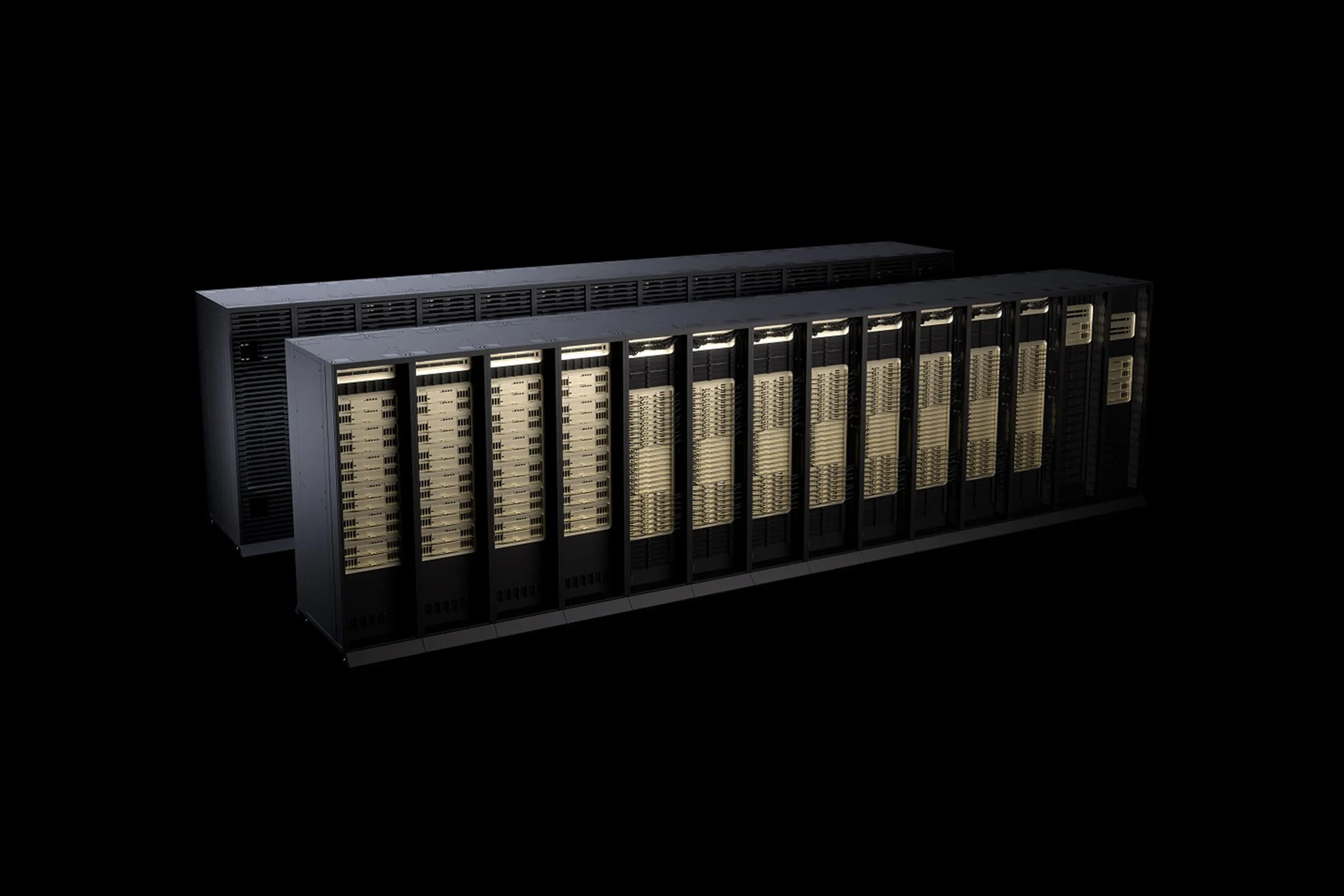
Chip companies have continued to see demand. Nvidia said the Rubin platform generated nearly $20 billion in its first quarter of production shipments. Its systems are running at CoreWeave, Google, Microsoft and Oracle, while Meta plans to expand Vera Rubin deployments to train and run AI models and agents.
Nvidia also described work with major model developers. Anthropic expanded access to Vera Rubin capacity through cloud providers and is working with Nvidia on future chip designs. OpenAI is among the companies adopting Nvidia’s Vera CPUs. Nvidia interim CEO Colette Kress said major frontier labs are expected to account for approximately 15 percent of the company’s data center revenue this fiscal year.
AMD reported its biggest quarter earlier this month, with revenue up 45 percent to $13.4 billion. Data center sales nearly doubled to $8.5 billion. OpenAI and Anthropic were among the first customers running workloads on AMD’s Helios systems, which use its latest MI450 GPUs.

Inference Adds to AI Infrastructure Demand
Demand may not depend only on training new models. Inference, which the source describes as running models that already exist, is also growing. Counterpoint Research vice president Neil Shah said inference workloads collectively require more computing infrastructure than training and can increase demand for different types of accelerators.
Ramp data cited in the source showed frontier model families made up about 60 percent of token usage among businesses using the platform in early November. That was a record high and about three times their share at the start of the year. At the same time, Ramp lead economist Ara Kharazian said companies were using more AI while competition among model providers pushed token prices down rapidly.
Kress said token prices had fallen nearly 60 percent since May, spurring more usage. Nvidia GPU rental prices across generations had risen, according to the source. Those figures point to a market where lower prices can coincide with greater use of computing capacity.
Infrastructure requirements extend beyond processors. A planned data centre power project illustrates how proposed computing campuses also depend on power connections. That report says a substation plan for Teesworks remains subject to an outline planning decision.
As organizations put AI systems to work, infrastructure providers may continue to see demand even if frontier training slows. A related quantum computing data test also shows how computing advances depend on hardware capacity, though it concerns a separate technology and experiment.
AI’s expanding use also keeps security questions in public reporting. Smartech Daily has covered AI models used by cybersecurity defenders, including a reported vulnerability finding and patch. That coverage describes defensive research and remediation, without instructions for exploiting systems.
Chip demand still faces a competitive constraint: AI companies are increasingly considering custom chips that can serve models more cheaply than general-purpose GPUs. Counterpoint expects shipments of custom AI server processors to surpass data center GPUs by 2028. Nvidia maintained its gross margin outlook when asked whether it would sacrifice margin as customers focus on custom chips and efficiency.
The next sign to watch is whether chip orders and infrastructure spending hold as companies balance frontier training, inference use and cheaper custom processors.