

Dreame, the robot vacuum manufacturer, is developing service robots intended to handle household chores with artificial intelligence. According to a KrASIA report adapted from 36Kr, the company presented two designs at the 2026 IFA show in Berlin: the Echo S1, a single-arm robot focused on laundry, and the Echo P1, a dual-arm robot intended for broader household and commercial tasks. The designs target complete chores in changeable home environments, but the report stresses the gap between a demonstration and reliable daily operation.
Moving from trade show prototypes to functional household robots requires more than elegant movement or clever algorithms. Homes lack the controlled variables of laboratories. Clothes shift and deform. Lighting changes. Obstacles appear. A single failure at any stage, grasping a garment, opening a dryer, or transferring items, can derail an entire task. Engineering reliability now matters as much as technological capability.
Building A Laundry Robot From Real-World Constraints
The Echo S1 addresses one specific chore: collecting clothes scattered throughout a home, moving laundry baskets, and coordinating interaction with washers and dryers. This focused scope reflects a practical strategy. Rather than starting only with a general-purpose robot, Dreame is working on a defined routine in which it can identify problems and develop more reliable handling.

The S1’s physical design reflects engineering tradeoffs. Its single arm extends 1,150 millimeters from shoulder to wrist and can lift up to five kilograms. The robot’s height adjusts between 1,570 and 2,275 millimeters to work with appliances of different sizes. The reported specifications are intended to help it collect clothes, pull baskets and interact with washers and dryers at different heights.
The S1 is expected to use two AI foundation models to interpret instructions and guide its actions. A multimodal large language model (MLLM) would handle real-time voice interaction in multiple languages and dialects. A vision-language-action (VLA) model would combine spoken instructions and visual information to translate tasks into movements. The report describes the intended architecture, not independently verified results from routine household use.
Clothing creates a handling challenge because it is soft and changes shape. A laundry robot must recognize clothes and appliances, locate them in space, grasp flexible objects, interact with equipment and coordinate the stages of the task. An error propagates. Dropped laundry or a missed dryer interaction breaks the entire workflow.
Broader Services And The Path To Practical Deployment
The Echo P1 pursues a wider scope with its dual arms and omnidirectional mobile base. Potential applications include tidying spaces by moving and organizing objects, assisting with basic care tasks, and commercial uses such as preparing made-to-order drinks or picking and placing merchandise in retail settings. This two-track approach lets Dreame develop focused capability in the S1 while exploring commercial viability with the P1.
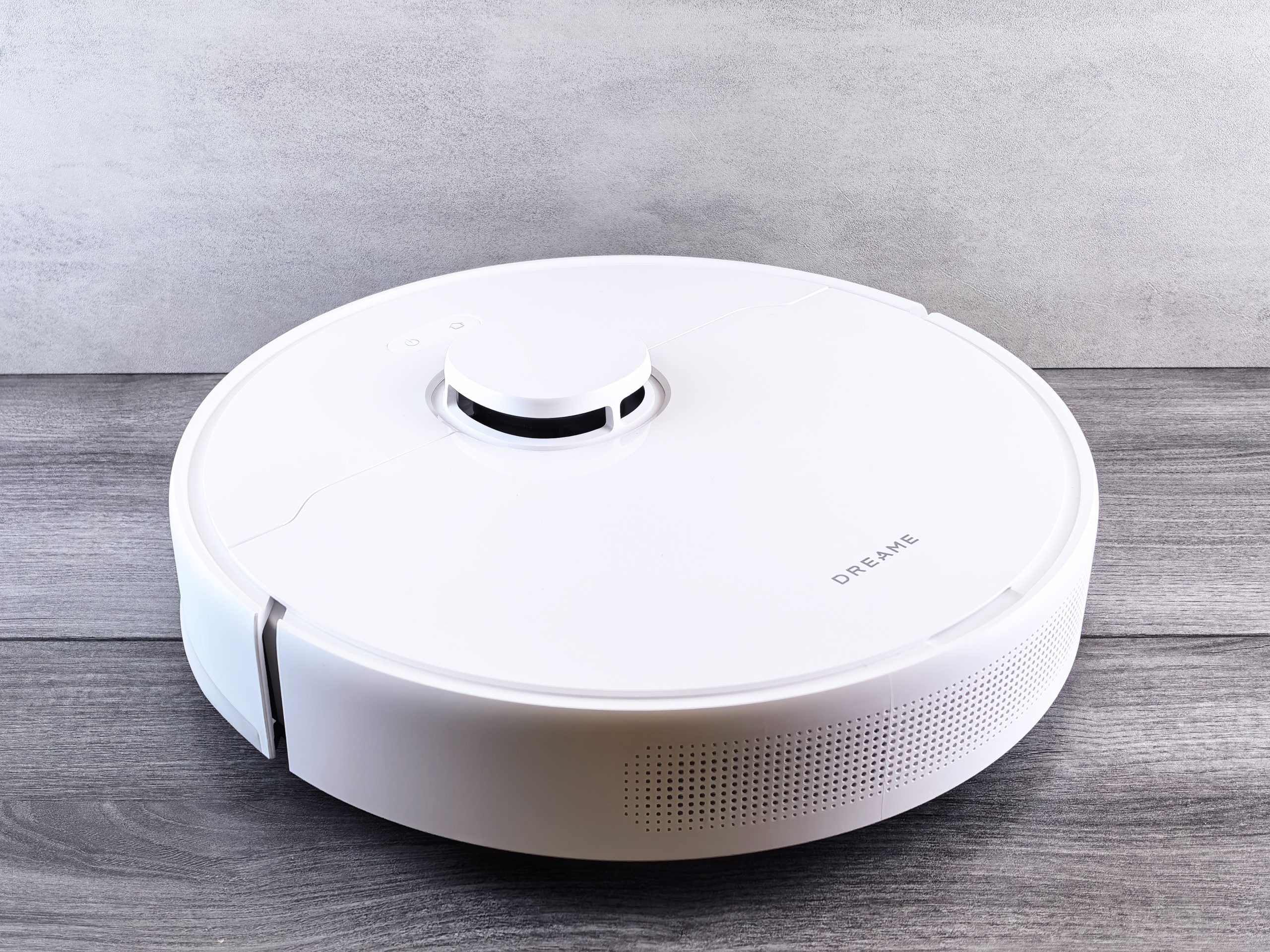
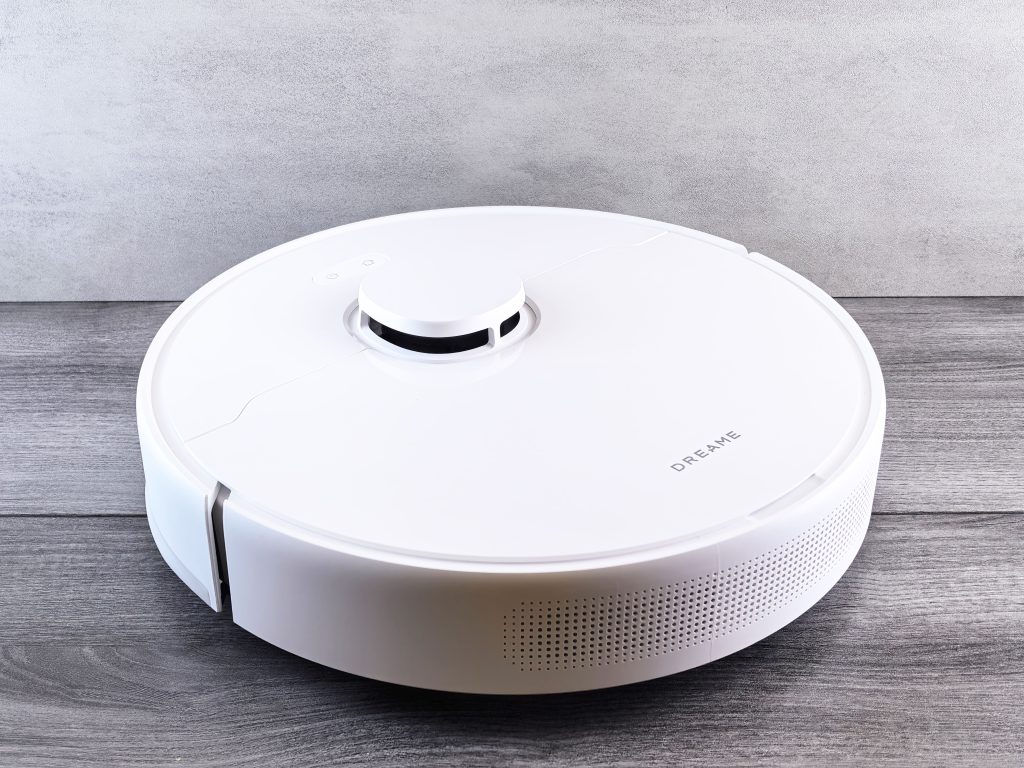
Dreame’s robot vacuum business provides experience that may inform its service-robot development. KrASIA, citing IDC data, reports that Dreame accounted for 26.1 percent of global robot vacuum unit sales and 31.2 percent of sales revenue in the first half of 2026. Those figures concern robot vacuums, not the Echo service robots. Household use can provide feedback about room layouts, users’ needs and faults that emerge over time.
Robot vacuums depend on computer vision, obstacle avoidance, route planning, motion control, and energy management. Those same capabilities form the foundation for service robots. The report says the Echo S1 and P1 share capabilities in embodied intelligence models, robotic arm control and computer vision. It does not say their arm-control systems were inherited from robot vacuums. The company can also leverage its existing research teams, manufacturing infrastructure, supply chain relationships, and reliability testing processes to move prototypes toward finished products.
Real-world household use can expose weaknesses that laboratory testing may miss. Different room layouts, user behavior patterns, and extended operation under complex workloads expose weaknesses in initial designs. Dreame plans to build experience gradually, testing capabilities through prolonged use before attempting more demanding tasks. That strategy requires coordinating perception, decision-making, movement, manufacturing, and testing in actual homes, a process fundamentally different from assembling algorithms and hardware in isolation.
The Gap Between Demonstration And Sustained Operation
Household service robots remain in early stages. The report identifies safety, stability, cost and certification as challenges for household deployment. The next critical phase is sustained operation outside controlled demonstrations. Complex chores must be broken into individual actions, linked into complete sequences, and tested through prolonged real-world use rather than confirmed through initial trials alone.
Dreame’s focus on laundry creates a defined starting point. The routine is familiar enough that problems become visible, yet complex enough to develop capabilities applicable to other household tasks. Moving from floor cleaning to handling soft objects and coordinating multi-step appliance interaction will require sustained investment, iterative refinement, and testing across diverse home environments.
The report leaves the central performance question open: how consistently can the Echo robots complete useful jobs outside demonstrations? It provides no consumer price, general availability date or independent household-test results. The designs show Dreame’s intended direction, while their readiness for sustained home use remains to be established.