

Penn Engineering brings research and practical ideas into the center of Climate Week at Penn, a campus program held October 5–9 for its seventh annual edition, according to Climate Week at Penn. The week gathered students, faculty and staff around climate challenges and opportunities for action, under the theme “Empowerment and Action.”
Engineering events moved across materials science, water, policy, artificial intelligence, energy and sustainability. Lorena Grundy, a Practice Assistant Professor in Chemical and Biomolecular Engineering who served on the core organizing committee, said the theme framed climate change as serious while emphasizing that people could address it.
Penn Engineering Brings Research Into Public View
The week opened with the E-Seeds Lab Tour, hosted by the Shu Yang Group. Visitors saw wood-based robotic seeds inspired by Erodium seeds, which can bury themselves. In response to moisture, the structures move through soil and help create conditions for seed germination and plant growth.
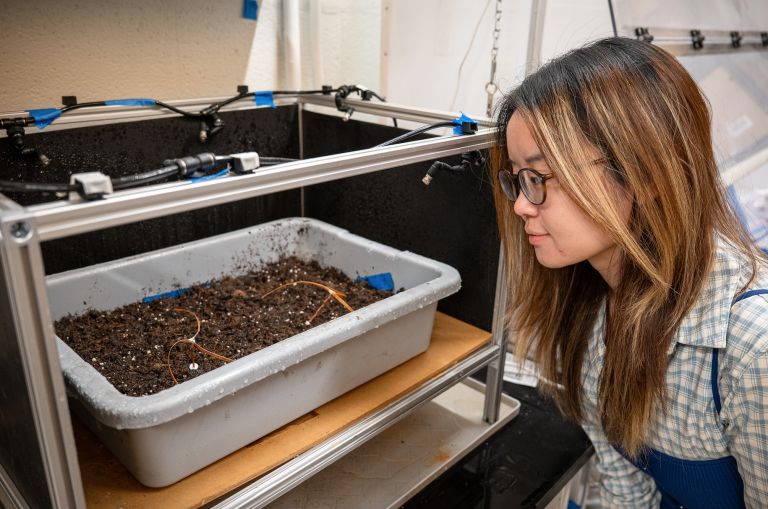
The demonstration connected materials science, robotics and biology through a specific mechanism: wooden structures respond to water as they move through soil. The tour showed how materials science, robotics and biology can come together in research on sustainable systems.
Water Science Meets Campus Life
On Wednesday, H2Know: A Water Pollution Pop-Up brought water science to College Green. The McBride Lab organized it with the Penn Engineering Futures Fund, The Water Center at Penn and Fairmount Water Works. Hands-on demonstrations and real microplastics samples invited visitors to consider connections between water pollution and a changing climate.
Organizers filtered water from bottled sources and local environments, then stained microplastics so they could be seen under ultraviolet light. The activity made pollution visible and gave visitors a way to compare samples. It also connected with other Smartech Daily reporting on water and energy systems.
Policy, Computing and Energy Took the Stage
A panel called Decoding Climate Policy from City Hall to the White House examined how data, communities and effective messengers can help advance climate policy. Organized in part by the Penn Engineering Green Team, it featured former Atlanta Mayor Kasim Reed and Ali Zaidi, a Practice Professor in Materials Science and Engineering and former White House National Climate Advisor.
Artificial intelligence also had a place in the program. At AI Use in a Climate Change Era, Benjamin Lee joined researchers and university leaders to discuss climate research applications, energy-efficient computing and the environmental costs of infrastructure that supports AI. The discussion linked technical choices with the resources needed to run them, a subject explored in Smartech Daily’s coverage of technology and sustainability work.
Fusion@Penn hosted a separate panel on nuclear fusion. Researchers, engineers and industry voices discussed the technology, challenges that remain and what it would take to connect commercial fusion plants to the electrical grid.
Student Ideas Closed the Week
Climate Week ended with Transform Penn: A Green Fund Pitch Competition, organized by Penn Sustainability and Penn Engineering’s Energy and Sustainability Engineering master’s program. Student teams presented practical sustainability ideas designed to become projects that could be tested and implemented at Penn.
The winners were second-year undergraduate students Christopher Zhu and Daniel Zheng, both in Chemical and Biomolecular Engineering. Their proposal, called Penn Pause, focused on managing electricity usage on Red Days, when the grid experiences peak stress.
The competition’s focus on testing campus ideas connects naturally with Smartech Daily’s guide to technology for sustainability. Grundy said it gives students a chance to pitch actionable projects and “take real steps toward bringing those projects to fruition.”