

Researchers at The Korea Advanced Institute of Science and Technology (KAIST) have developed a new AI technology that lets smartphones remember and reuse knowledge from previous server responses, much like consulting a notebook instead of asking an expert repeatedly. Called CURE, or Cumulative Knowledge Reuse, the system reduces how often a device needs to contact a powerful server model for help while maintaining accuracy and speed.
The breakthrough addresses a core constraint of mobile AI: smartphones have limited processing power and memory. They run small, lightweight AI models that handle simple tasks quickly but struggle with complex or unfamiliar images. Sending every difficult case to a powerful server model improves accuracy but costs time, network bandwidth, and operating expenses.
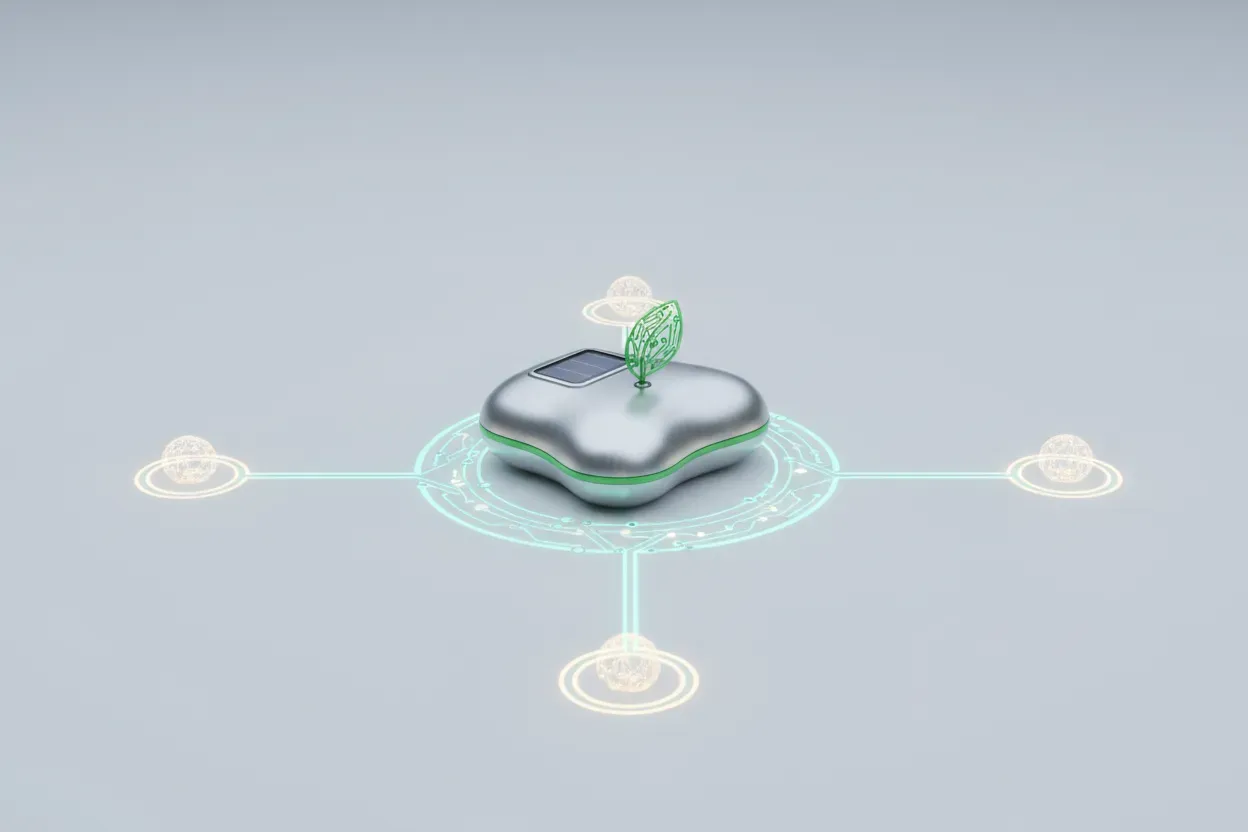
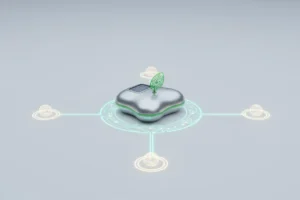
CURE changes this dynamic by storing a summary of solutions the server has already provided. When a smartphone encounters a new image similar to one it has seen before, it can use that stored knowledge to make a decision locally. The system no longer forgets what the server taught it.

How The System Works Without Retraining
The process follows three stages. First, the on-device model checks whether it can handle an input reliably on its own. If not, the system consults knowledge previously stored from earlier server responses. Only when that stored knowledge is also insufficient does the system contact the server.
This mirrors how a student might solve a problem independently, then consult handwritten notes before asking a teacher for help. For example, when a smartphone cannot identify a car model in a photo, it may ask a server. CURE then stores a summary of the car’s distinguishing features, body shape, headlight design, and similar details, rather than saving the entire image. When the device later encounters a photo of a similar car, it can identify it locally.
CURE requires no retraining of either the on-device model or the server model. It leaves both systems unchanged and adds a separate knowledge store, making it adaptable to different AI models and services.
Testing Results Show Significant Efficiency Gains
Researchers tested CURE using vision-language models, which connect images with text to understand visual information. They used MobileCLIP2 on the device and EVA-CLIP, which has 18 billion parameters, on the server. Parameters are numerical values that encode learned information and help models distinguish objects.
Across image classification datasets, CURE achieved accuracy close to sending every input to the large server model. It also made an average of 55.61% fewer server calls than a device-server collaboration baseline that does not retain knowledge. In end-to-end tests including communication time, CURE ran up to 2.80 times as fast as the non-cumulative approach and up to 3.67 times as fast as sending every input to the server.
Making fewer server calls reduced the time spent transferring data and waiting for responses. The efficiency gains depend on device processing power, storage capacity, network conditions, and the characteristics of input data.
Beyond Smartphones: Broader Applications
The technology could benefit robots and wearables that need to recognize surroundings with limited computing resources. Robots operating over slow or unreliable networks could use previously acquired knowledge to make more decisions locally without waiting for server responses.
Potential applications include reducing repeated data transfers and server computation for image recognition tasks. Shorter waits for users and lower operating costs for service providers would follow naturally from fewer server requests. Professor Jae-Gil Lee from KAIST noted that CURE allows small on-device AI models to remember and reuse knowledge they have already obtained, rather than repeatedly asking the server the same question.
The benefits in practice will depend on further testing across different devices and environments. Most of the potential remains theoretical until real-world deployment reveals how the system performs under varying network conditions and with diverse types of input data.