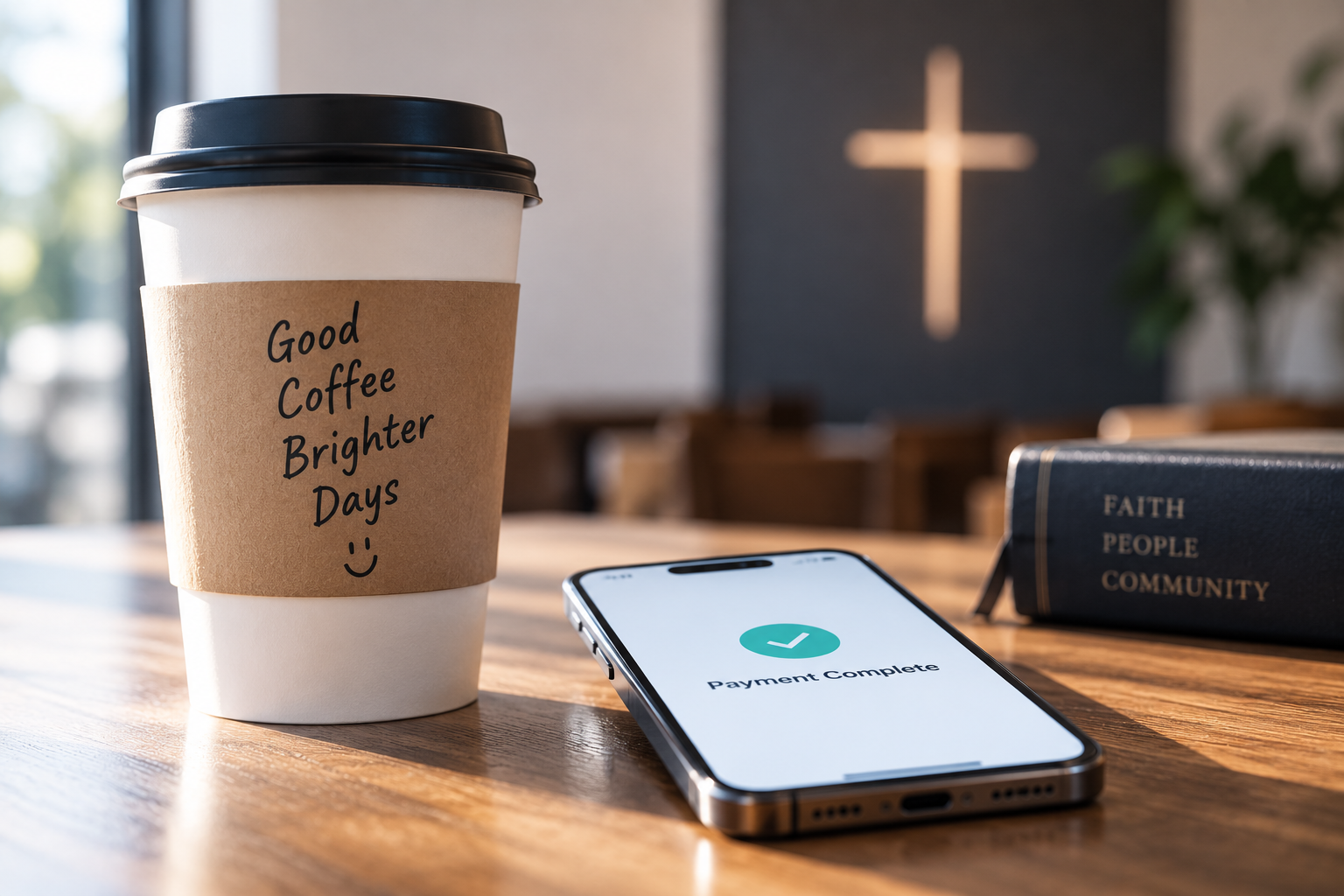



Dean Sweetman was ordering coffee when church software suddenly looked old.
In 2012, Sweetman used Starbucks’ mobile payment system for the first time and was struck by how little effort the transaction required. He had spent decades as a pastor, so his mind went somewhere less obvious: why did giving at church still depend so heavily on checks and a physical offering plate when buying a latte could happen through a phone?
His son Barnabas built the first version of Tithely in six months, and Sweetman introduced it at the Atlanta church he was pastoring. The company began gaining wider traction in 2014 after Sweetman teamed up with Frank Barry and Steve Klein. Today, Tithely says it serves more than 53,000 churches worldwide, with Sweetman and Barry serving as co-CEOs.
The interesting part of that history is how ordinary the original insight was. Sweetman was not responding to a new piece of church technology. He was responding to a consumer experience that had quietly raised his expectations for every other piece of software he used.
Once paying for coffee felt that easy, giving money through older church systems felt needlessly difficult.
Consumer Software Changed the Standard
People rarely separate their expectations neatly by industry. Someone who can pay a bill on a phone or change a reservation in seconds does not suddenly become more patient because the software in front of them was built for a church.
That creates pressure on specialized software companies because the comparison is no longer limited to direct competitors. A church giving platform may be judged against the smoothest payment experience someone used earlier that day.
Tithely’s first product attacked that friction directly. Church members could give digitally rather than waiting for a Sunday service, and recurring giving became easier to manage. The current product has pushed the same idea further with mobile-friendly giving forms and passwordless login, while donors can also manage recurring gifts themselves.
None of those features sound radical now. That is partly the point.
Consumer technology has trained people to expect software to stay out of the way. Extra steps become noticeable because users already know a smoother version is possible somewhere else.
For vertical SaaS companies, that changes the job. Deep knowledge of an industry still matters, but knowing the industry cannot become an excuse for clumsy software. The product has to understand a specialized workflow while still feeling familiar to someone who spends the rest of the day using mainstream apps.
Tithely had an advantage there because Sweetman already understood the church side of the problem. He did not need to learn why giving mattered or how a Sunday service worked. His realization was that the experience surrounding those things had fallen behind the technology people were already carrying in their pockets.
One Easier Transaction Led to a Much Bigger Product
Once Tithely had solved digital giving, the company had a closer view of the other software church staff were using.
That eventually pushed the product well beyond donations. Tithely now offers church management software alongside tools for websites and custom apps. Its management product handles work such as service planning and member communication, giving churches a way to keep more of their daily administration connected.
That expansion follows a familiar pattern in vertical SaaS. A company enters through one recurring pain point, earns a place in the customer’s routine and then discovers which nearby jobs are still being handled awkwardly.
The important part is knowing where to stop. Adding more software only helps when those additions reduce work for the customer. Otherwise, the original simplicity gets buried under features.
Tithely’s early idea remains visible in its current giving product. A donor can use a mobile-friendly form without creating an account, and the platform supports digital wallets such as Apple Pay and Google Pay. Churches get giving data connected with people records on the administrative side.
The technology has become much larger than the mobile app Sweetman first introduced at his church, but the product question has stayed remarkably consistent: how much effort should this task really require?
That is a useful question for any software company serving an industry with old habits. Customers may tolerate a slow process because they have always done it that way, right up until another product shows them how little friction technology can require.
For Tithely, that comparison happened over coffee. The opportunity came from noticing that the standard had already changed.